

Cancer care does not end at the hospital door
A diagnosis is one sentence. What follows it is months of appointments, scans, bus fares, missed work, and decisions no family should have to make with an empty wallet. Besta Health Foundation was built for that second part — the long, expensive, exhausting stretch that begins after the doctor finishes speaking.
Since the Foundation was registered in January 2025, more than 350 cancer patients have come through its patient care and support programme. Here is what that support actually consists of, and why each piece of it matters.
The costs that arrive after the diagnosis
Tanzania records an estimated 44,931 new cancer cases and 29,743 cancer deaths a year, according to GLOBOCAN 2022 estimates. Cervical cancer alone accounts for just over half of all cancers in women. Prostate cancer leads among men.
Look at those two numbers side by side. Deaths run at roughly two-thirds of new cases. That gap is not only a medical problem. It is a logistics problem, a money problem, and very often a problem of arriving too late.
Treatment exists. Reaching it is the hard part.
A patient referred to Dar es Salaam from Kigoma or Mtwara faces a journey before they face a drip. Chemotherapy is not one visit; it is a cycle, repeated, over months. Each cycle means fare, a place to sleep, food, and days away from whatever work pays the family’s rent. Many patients start treatment and stop halfway — not because the treatment failed, but because the household ran out of money before the course ran out of sessions.
Besta Health Foundation was founded on that observation. As the philanthropic arm of Besta Hospital, and working alongside Shujaa Cancer Foundation and Associazione Ruvuma Onlus, BHF sets out to remove the barriers that sit between a patient and a treatment that already exists.
The medicine is not the missing piece. The support around it usually is.
Paying for treatment that would otherwise be out of reach
The first and largest part of the programme is direct financial help with care.
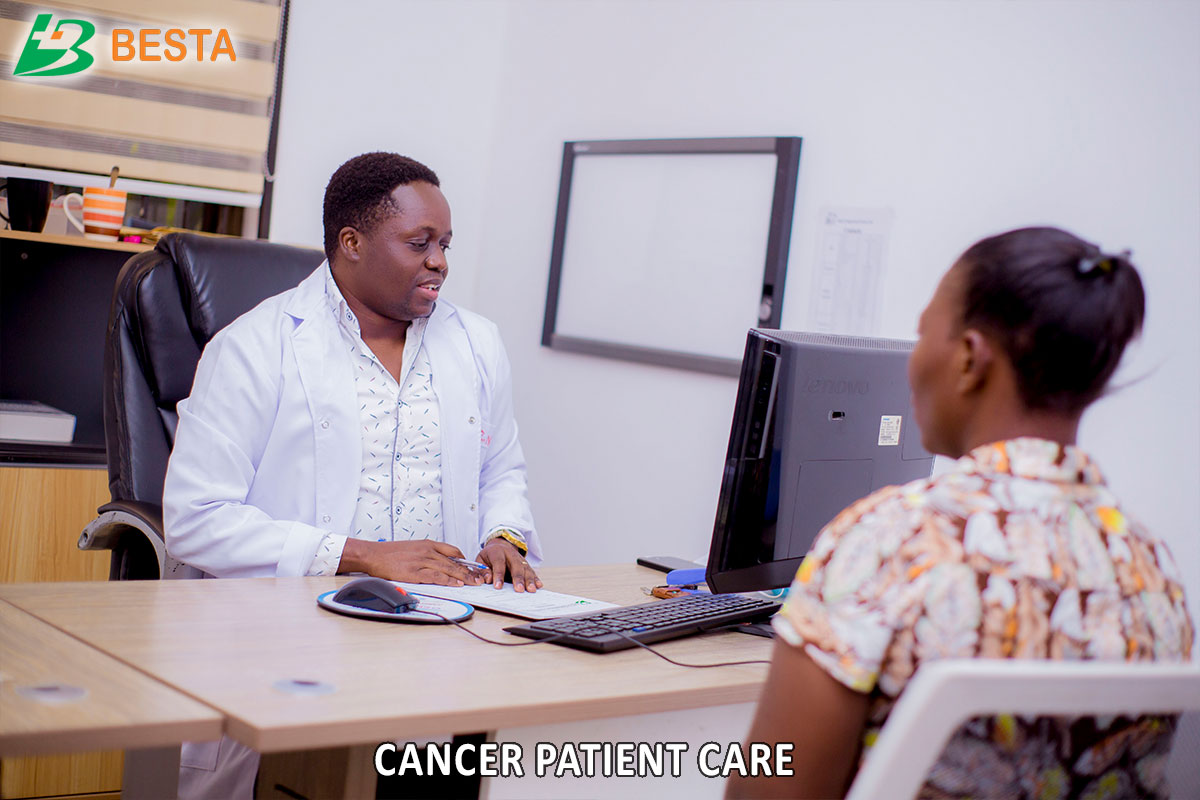
BHF has assisted more than 120 patients in accessing life-saving services through treatment subsidies and financial assistance. That covers:
- Chemotherapy
- Radiotherapy
- Surgery
- Biopsies
- Other specialised oncology services
A second group of patients never gets that far, because they cannot afford to find out what is wrong in the first place. Imaging and laboratory work sit in front of every treatment plan, and they carry their own price tag. BHF has supported more than 200 patients with diagnostic investigations — imaging studies, laboratory tests, and biopsies — so that diagnosis and treatment planning happen on time rather than eventually.
Timing is the whole argument here. A cancer caught early is a different disease, clinically and financially, from the same cancer caught late. Every week a patient spends waiting to afford a scan is a week the disease is not waiting.
Across all its services, the Foundation estimates it has delivered support worth TZS 667.5 million to patients and families who would otherwise have paid out of pocket or gone without. Treatment subsidies make up the largest single share of that, at an estimated TZS 300 million, followed by awareness and education materials at TZS 120 million and diagnostic support at TZS 100 million.
Those are not donations in the abstract. They are individual bills that a family did not have to find a way to pay.
The bus fare problem
Some of the most useful money BHF spends is also the smallest.
The Foundation provides transport and daily meal allowances of up to TZS 15,000 per patient per day, so that people can attend every scheduled treatment session without a break in the course. It sounds modest next to the cost of radiotherapy. It is often the thing that decides whether the radiotherapy gets finished.
Geography explains why this matters so much. BHF is headquartered at Besta Hospital in Kinondoni, Dar es Salaam, but its patients come from across the country, referred in by regional hospitals, district hospitals, health centres, and community outreach programmes.
| Where BHF patients come from | Share |
|---|---|
| Dar es Salaam | 45% |
| Zanzibar | 18% |
| Tanga | 12% |
| Pwani | 8% |
| Mwanza, Mbeya, Dodoma, Arusha and other regions | Remainder |
More than half of the patients supported are travelling from outside Dar es Salaam to reach specialised oncology services concentrated in the city. For them, an incomplete treatment course is rarely a decision about medicine. It is a decision about fare.
Removing that one obstacle keeps people in treatment. Keeping people in treatment is what changes outcomes.
Care for what the scans do not show
Cancer arrives with a second set of injuries that no imaging picks up: fear, isolation, depression, strain inside families, and the particular loneliness of a patient who has stopped telling people what they are going through.
BHF delivers regular counselling, peer support, and spiritual care to more than 150 patients and their families. Families are named deliberately there. A cancer diagnosis reorganises an entire household — the spouse who becomes a full-time carer, the child whose schooling is interrupted, the parent who stops asking for help because the household is already stretched.
The Foundation’s charitable outreach extends further still, reaching patients it does not treat directly. That work includes donations and patient welfare activities at:
- Ocean Road Cancer Institute (ORCI), Tanzania’s main referral centre for cancer treatment
- The Paediatric Oncology Unit at Muhimbili National Hospital
- Children’s homes caring for vulnerable children affected by cancer
Support does not stop when treatment does, either. Through its survivorship programme, BHF offers follow-up care, peer support groups, rehabilitation, survivorship planning, and help with returning to work and community life. For patients living with advanced or life-limiting cancer, home-based palliative care teams — clinicians, counsellors, social workers, spiritual leaders and trained volunteers — visit patients where they live, managing pain and symptoms and coaching family members through caring for someone they love.
The line the Foundation keeps coming back to is short and hard to deliver on: no one should face cancer alone.
What 350 patients look like in numbers
Counting patients is an imperfect way to describe this work, but it is an honest one.
| Impact area | Achieved since January 2025 |
|---|---|
| Cancer patients directly supported | 350+ |
| Patients receiving treatment subsidies | 120+ |
| Patients assisted with diagnostic services | 200+ |
| Patients receiving psychosocial support | 150+ |
| Health workers, caregivers and survivors trained | 200+ |
| Community members reached with awareness | 8,000+ |
| Estimated value of services delivered | TZS 667.5M |
Behind every row is a person who got to a scan, finished a course of chemotherapy, or sat with a counsellor on the week they most needed one.
The Foundation’s targets for 2030 are considerably larger: 5,000+ patients supported, a dedicated accommodation centre for patients travelling in for treatment, and a permanent Cancer Support Fund so that help does not depend on the timing of any single donation.
Reaching those numbers depends on people outside the Foundation. A donation of TZS 15,000 covers one patient’s transport and food for one day of treatment. Larger gifts go toward diagnostics, treatment subsidies, and screening camps in communities that have never had one. Organisations can partner with BHF on screening, training, or research, and volunteers keep the outreach work running.
If you want to help carry some of that weight, donate, partner with us, or get in touch.
Besta Health Foundation is a registered non-governmental organisation (Registration No. 00NGO/R/7951), established 3 January 2025 under the Non-Governmental Organizations Act, 2002. Head office: Tunisia Road, Ada Estate, Kinondoni, Dar es Salaam. P.O. Box 5596.